Mannheim isn’t a destination you should just check off your list with a quick glance. At first glance, the city may seem less romantic than Heidelberg or Speyer, but that is precisely what makes it so appealing: Mannheim is a city of structure, ideas, and contrasts. The palace and the city squares, the water tower and the Planken, musical history and inventive spirit, the Electoral Palatinate and modern urban society—all lie in close proximity here.
Anyone planning an outing for a group, a company retreat, a school class, or a cultural trip will quickly find themselves asking: Which guided tour of Mannheim is the best fit? A classic tour of the “City of Squares”? Or a themed “inventors’ tour” focusing on Carl Benz, Karl Drais, Siemens, and spaghetti ice cream?
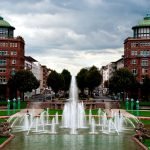
For groups visiting Mannheim for the first time, the classic Mannheim city tour—the squares, the palace, and the water tower—is usually the best choice. It explains the city based on its basic layout: from the Baroque palace to the Jesuit Church and the squares, all the way to Friedrichsplatz with the water tower.
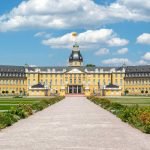
With its vast courtyard of honor and a 440-meter-long ceremonial façade, the Baroque Palace of Mannheim is one of the largest palace complexes in Europe. It showcases Mannheim as the former capital of the Electoral Palatinate: imposing, meticulously planned, and politically ambitious.
From there, the path leads to the “Quadratestadt” (City of Squares). Mannheim’s downtown does not follow the classic layout of medieval alleyways, but rather a unique grid pattern of squares. The squares stretch from the castle to the Neckar River and from the water tower to the Kurt Schumacher Bridge.
This tour is particularly well-suited for tour groups, clubs, school classes, and private groups who want to get a comprehensive understanding of Mannheim. It answers questions such as: Why do the streets here have different names? What role did the Electoral Palatinate play? Why is the water tower so important? And what makes Mannheim different from other cities in the Rhine-Neckar region?
The “Mannheim – Made in Mannheim” Inventors’ Tour is the perfect choice if your group wants to experience Mannheim from a more unusual perspective. This tour isn’t primarily about classic sights, but rather about ideas that originated in Mannheim and had an impact far beyond the city limits.
Mannheim.de lists Karl Drais and his bicycle, as well as Siemens’ first electric elevator, among Mannheim’s most significant inventions. Carl Benz also symbolizes Mannheim as a city of mobility and technological history.
The tour ties these technical stories together with other aspects of Mannheim’s history: the Lanz Bulldog, the origins of TÜV, the Mannheim School, the Mannheim Dossier, the Mannheim Hours, and spaghetti ice cream. It is precisely this mix that makes the tour so compelling: it is not only interesting for tech enthusiasts, but also for groups who want to explore the city’s history, music, economy, everyday life, and innovation together.
Music is also part of this thematic area. Mannheim is a UNESCO City of Music; in the 18th century, the Mannheim School shaped the modern orchestral sound and the development of the classical concert symphony. And even in the culinary realm, Mannheim has a history of innovation: Dario Fontanella developed spaghetti ice cream in Mannheim using a chilled spaetzle press.
This tour is particularly well-suited for companies, technical professionals, school groups, conferences, incentive trips, and groups who want not only to see Mannheim but also to understand it as a city of ideas.
For first-time visitors, the classic city tour is usually the better choice. It helps you get your bearings, explains the city’s squares, takes you to key locations, and gives you a clear picture of the city.
The Inventor Tour is particularly well-suited for companies and corporate outings. Topics such as innovation, the courage to experiment, technical safety, and practical ideas can be effectively linked to corporate culture, change, and team-building initiatives.
Both tours are suitable for school groups. The classic tour focuses on urban development, the Kurpfalz region, migration, and architecture. The Inventors’ Tour explores connections to technology, mobility, industrialization, music history, and social change.
For cultural tour groups, the decision depends on the itinerary. Those who want to get to know Mannheim as a city should start with the palace, the squares, and the water tower. Those who are already familiar with classic cities like Heidelberg or Speyer will find “Made in Mannheim” to be an exciting contrast.
Yes, this combination is particularly well-suited for groups that have a little more time. The classic city tour showcases Mannheim as a royal seat, the “City of Squares,” and a modern Rhine-Neckar metropolis. The Inventors’ Tour expands on this picture by exploring mobility, the history of technology, music, shipping, weather observation, and everyday culture.
This way, rather than creating a duplicative program, we get a more complete picture of Mannheim: on the one hand, the city’s structure; on the other, its inventive spirit.
Mannheim is diverse enough to offer a variety of ways to experience it. If you’re looking for a general overview, choose the classic city tour. If you’re interested in a specific topic that sparks conversation, opt for the Inventors’ Tour. If you want to truly convey the full scope of Mannheim, combine both.