Frankfurt and Wiesbaden offer two different perspectives on the history of the Rhine-Main region. In Frankfurt am Main, you’ll encounter imperial coronations, townhouses, and the beginnings of parliamentary democracy. Wiesbaden tells the story of thermal springs, the Dukes of Nassau, and an international spa community. So if you’re planning a city trip or a group outing, you can easily tailor your choice to your own interests.
Important sites in Frankfurt’s city history are clustered closely together around the Römerberg. The Römer symbolizes municipal self-government and the city’s tradition as a center of trade. The Imperial Cathedral of St. Bartholomew commemorates royal elections and imperial coronations. At St. Paul’s Church, one’s gaze is drawn back to the year 1848, when the German National Assembly convened here.
The approach to history is particularly vivid in the New Old Town. Completed in 2018, this neighborhood between the cathedral and the Römer comprises 35 buildings, including 15 historical reconstructions and 20 new structures. At Hühnermarkt and in the adjacent alleys, it’s worth taking a closer look at the facades, house names, and the layout of the square. This helps illustrate how Frankfurt integrates historic cityscapes into its present.
At the end of a stroll, the banks of the Main offer an opportunity to reflect on the impressions. Around the Eiserner Steg, the river, the Old Town, and the view of the skyline come together.
Wiesbaden’s development is closely linked to its thermal waters. Even the Romans made use of the town’s springs, which they called Aquae Mattiacorum. Water with a temperature of more than 66 degrees Celsius flows from the Kochbrunnen. This spring explains why bathing, spa treatments, and hospitality have shaped the city for centuries.
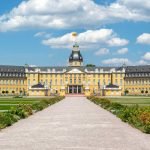
At Schlossplatz, you’ll find the City Palace, the Marktkirche, and the town halls. The former ducal palace is now home to the Hessian State Parliament. The square thus combines the history of the royal residence with the political present.
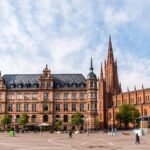
The Kurhaus, opened in 1907, and the Bowling Green illustrate Wiesbaden’s rise as a social hub. Here, you can discover the architecture, culture, and lifestyle of the former world-class spa town.
Frankfurt is particularly well-suited for visitors interested in the history of democracy, commerce, and the reconstruction of a historic city center. Wiesbaden appeals to guests who want to explore thermal springs, royal architecture, and European spa culture. Both cities offer a historic city center that can be explored on foot.
It’s helpful to ask yourself one quick question beforehand: What story would you like to share after the outing? The debates at St. Paul’s Church, the reconstruction of old townhouses, or the social life centered around Wiesbaden’s springs? This often helps you identify a natural focus.
When planning your day, it’s worth taking the time to get to know the city at your own pace and setting aside time for your own discoveries. A visit to a café or a stroll afterward creates space for conversations about what you’ve seen.
If you’re traveling with a group, our article “City Tours in Frankfurt or Wiesbaden—How to Plan Your Group Outing” can help you with the next steps . There, you’ll learn what questions are important to consider before taking a group tour.